
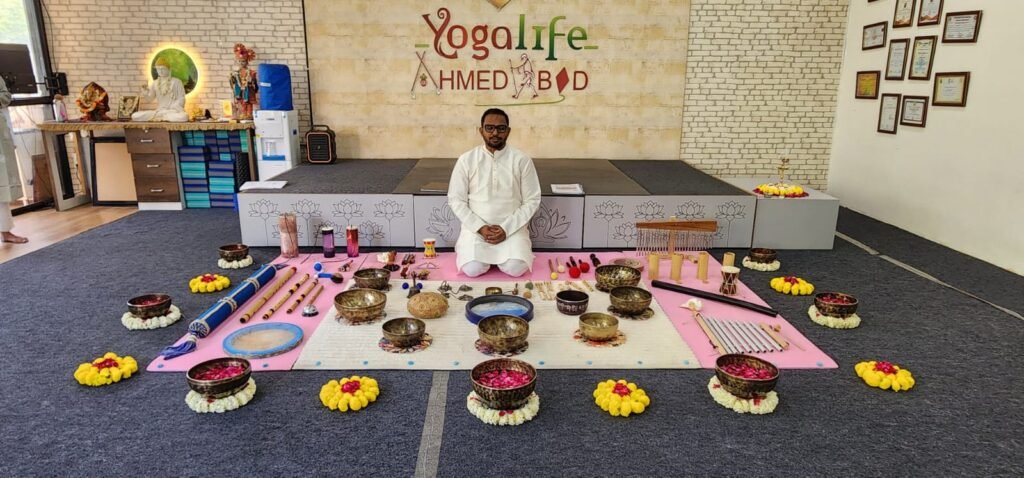
Want to learn Sound Healing and explore it as a professional skill? Becoming a Sound Healing Teacher starts with understanding the practice, learning how to work with instruments, and developing the confidence to guide others through a structured sound-based experience.
Whether you are a coach, yoga teacher, healer, wellness professional or someone discovering Sound Healing for the first time, the right training can help you build a strong foundation.
In this guide, we explain how to become a Sound Healing Teacher, what to look for in a Sound Healing course, and how to choose training that matches your goals.
What Is Sound Healing?
Sound Healing is a wellness practice that uses sound, vibration and instruments as part of a guided experience. Common instruments include singing bowls, gongs, chimes, drums and other sound-producing tools.
People may explore Sound Healing as part of relaxation, meditation, mindfulness or personal wellness. A Sound Healing session can also be incorporated into appropriate wellness practices by trained practitioners.
It is important to understand that Sound Healing is not a replacement for medical treatment or mental health care. A responsible practitioner should communicate the purpose and limitations of the practice clearly.
What Does a Sound Healing Teacher Do?
A Sound Healing Teacher helps participants learn about sound-based practices and the practical use of Sound Healing instruments.
Depending on their training and experience, a teacher may:
Introduce participants to different Sound Healing instruments
Explain basic sound and vibration concepts
Demonstrate how instruments are used
Guide practical exercises
Teach session preparation and structure
Help learners develop confidence through supervised practice
Explain professional boundaries and responsible communication
The role is not simply about knowing how to play an instrument. It also involves understanding the learning process, communicating clearly and creating a comfortable environment for participants.
How to Become a Sound Healing Teacher
1. Understand Why You Want to Learn Sound Healing
Before choosing a course, ask yourself what you want to achieve.
Are you interested in:
Learning Sound Healing for personal development?
Adding a new modality to your coaching or wellness practice?
Becoming a Sound Healing Teacher?
Exploring a new professional direction?
Understanding Sound Healing instruments more deeply?
Your answer will help you choose training that is relevant to your goals.
For example, a coach may be interested in learning how Sound Healing could complement their existing practice, while a beginner may first want to understand the fundamentals.
2. Learn the Foundations of Sound Healing
A good Sound Healing course should help you understand the basics before moving into more advanced practical work.
Look for training that explains:
What Sound Healing is
How different instruments are used
Basic sound and vibration concepts
How to prepare for a session
How to work with instruments safely and respectfully
How to communicate with participants
A strong foundation helps you approach Sound Healing with curiosity, confidence and responsibility.
3. Develop Practical Experience with Instruments
One of the most important parts of learning Sound Healing is hands-on practice.
Reading about singing bowls or gongs is different from actually learning how to use them.
Practical training may help you understand:
How to hold and use different instruments
How to create different sounds
How to work with rhythm and timing
How to combine instruments
How to observe the experience of participants
How to develop a structured Sound Healing session
At Healing Harmony, our Sound Healing Teacher Training includes practical exposure to 30+ Sound Healing Instruments, helping learners explore a wide range of tools during the training.
4. Choose the Right Sound Healing Teacher Training
Not every Sound Healing course has the same structure. Before enrolling, consider the following questions:
Does the course include practical training?
Hands-on learning is important if you want to develop confidence with instruments.
Who is conducting the training?
Look for information about the trainer’s experience, background and approach to teaching.
What does the course curriculum include?
Understand whether the training covers only instrument demonstrations or also includes techniques, practice and teacher-training components.
Is there an opportunity to ask questions and receive guidance?
A supportive learning environment can make a meaningful difference, especially for beginners.
What does the certificate represent?
Ask the training provider what the certificate confirms and how it may be used. A certificate should not be confused with a government licence or medical qualification unless it is specifically accredited as such.
5. Practise Before You Start Teaching
Learning Sound Healing is a process. Even after completing a course, continued practice can help you become more comfortable with instruments and session preparation.
You may begin by:
Practising with a small selection of instruments
Revisiting techniques taught during training
Observing experienced practitioners
Developing a simple session structure
Seeking feedback from your trainer
Continuing your learning through workshops and practice
The goal is not to know everything immediately. It is to build your skills gradually and understand how to use them responsibly.
Can Coaches and Wellness Professionals Learn Sound Healing?
Yes. Sound Healing can be an interesting additional skill for people already working in wellness.
For example, coaches, yoga teachers, meditation teachers and other wellness professionals may explore how Sound Healing could complement their existing work.
However, the way you use the practice should depend on your training, experience and professional scope.
If you are already working with clients, it is important to:
Be clear about what your training qualifies you to do
Avoid making medical or therapeutic claims you cannot support
Respect client boundaries
Refer people to appropriate professionals when needed
Continue developing your knowledge and practical skills
Sound Healing can be a valuable area of learning without being presented as a guaranteed career or income opportunity.
What Do You Learn in a Sound Healing Teacher Training Course?
A well-structured teacher training may include a combination of theory, demonstrations and practical learning.
At Healing Harmony, our Sound Healing Teacher Training Course is designed to help participants explore Sound Healing through practical exposure to 30+ instruments, Sound Healing techniques and teacher-training components.
The trainingis conducted by Jignesh Patel, Professional Healer and Wellness Coach, who brings 12+ years of experience and has worked with more than 5,000 people.
The course also includes an International Certificate. If you are considering the training, we recommend asking for the complete curriculum, certification details and course requirements before enrolling.
Why Choose a Residential Sound Healing Retreat?
A residential training offers an opportunity to focus on learning away from everyday distractions.
A 3-day residential Sound Healing Teacher Training may allow participants to spend more time with the instruments, practise techniques and connect with other learners.
For some people, the residential format can make the learning experience more immersive. It may also provide additional time for reflection, discussion and practical work.
If you are considering joining, ask the organisers about the complete schedule, accommodation, meals and what is included in the course fee.
Start Your Sound Healing Learning Journey
Becoming a Sound Healing Teacher is not about learning one instrument and immediately becoming an expert. It is about developing knowledge, practical skills, confidence and a responsible approach to working with sound.
If you are exploring Sound Healing Training, Sound Healing Certification or Sound Healing Teacher Training, begin by choosing a course that matches your goals and offers clear information about what you will learn.
At Healing Harmony, we believe that learning should be practical, supportive and grounded in experience.
Frequently Asked Questions
1. What is Sound Healing Teacher Training?
Sound Healing Teacher Training is a structured learning program that introduces participants to Sound Healing, sound-based wellness practices and the practical use of instruments. Depending on the course, it may also include session preparation, guided practice and teacher-training components.
2. How can I become a Sound Healing Teacher?
To become a Sound Healing Teacher, start by learning the foundations of Sound Healing, developing practical experience with instruments and choosing a training course that matches your goals. Continued practice, guidance from experienced trainers and responsible communication are important parts of developing your skills.
3. Who can join a Sound Healing Course?
Sound Healing courses may be suitable for beginners, coaches, trainers, yoga teachers, healers and wellness professionals. Eligibility and course requirements vary, so it is best to check with the training provider before enrolling.
4. Do I need previous experience to learn Sound Healing?
Not necessarily. Many introductory Sound Healing courses are designed for beginners. However, the level of training, practical requirements and expectations may differ between programs. Ask the course provider whether previous experience is required.
5. What instruments do you learn in Sound Healing Teacher Training?
The instruments covered depend on the course. Common Sound Healing instruments include singing bowls, gongs, chimes, drums, rain sticks and other sound-producing tools. At Healing Harmony, our teacher training includes practical exposure to 30+ Sound Healing Instruments.
6. What is the difference between a Sound Healing Workshop and Teacher Training?
A Sound Healing Workshop may focus on introducing participants to sound-based wellness practices or providing an experiential session. A Teacher Training Course generally has a more structured learning approach and may include instrument practice, techniques, session preparation and teacher-training components.
7. Can Coaches and Trainers learn Sound Healing?
Yes. Coaches, trainers and other wellness professionals may explore Sound Healing as an additional skill. Depending on their training and professional scope, they may consider how it could complement their existing practice. It is important to use the modality responsibly and avoid making unsupported medical claims.
8. What should I look for when choosing a Sound Healing Certification Course?
Before enrolling, consider the trainer’s experience, course curriculum, practical learning opportunities, certification details, course duration and what is included in the fee. Also ask whether the certificate represents completion of the training or a specific accreditation.
9. Is Sound Healing a replacement for medical treatment?
No. Sound Healing is a wellness practice and should not be presented as a replacement for medical treatment or mental health care. Anyone with a health concern should consult an appropriate qualified healthcare professional.
10. Does Healing Harmony offer Sound Healing Teacher Training?
Yes. Healing Harmony offers a Sound Healing Teacher Training Course with practical exposure to 30+ instruments, Sound Healing techniques and teacher-training components.