
If you are interested in wellness, meditation, coaching or holistic practices, you may have come across the term Sound Healing Course. But what does a Sound Healing course actually teach? Is it only about playing singing bowls, or does it include a deeper understanding of sound, instruments and session facilitation?
A well-structured Sound Healing Training program combines knowledge, practical experience and guided learning. It helps participants understand how sound-based practices are used in wellness settings and how to work with different instruments responsibly.
In this guide, Healing Harmony explains what you can expect to learn in a Sound Healing Course and what to consider before choosing a training program.
What Is Sound Healing?
Sound Healing is a wellness practice that uses sound, vibration and musical instruments as part of a guided experience. Common instruments include singing bowls, gongs, chimes, drums and other sound-producing tools.
Many people explore Sound Healing as part of relaxation, meditation, mindfulness and personal wellness. The experience may encourage participants to slow down, focus on the present moment and become more aware of sound.
However, Sound Healing should not be promoted as a replacement for medical treatment or mental health care. A responsible practitioner should communicate clearly about the purpose and limitations of the practice.
What Do You Learn in a Sound Healing Course?
The exact curriculum varies from one training provider to another. However, a comprehensive Sound Healing Course generally includes the following areas.
1. Understanding the Basics of Sound Healing
The first part of Sound Healing Training usually introduces the basic concepts behind sound-based practices.
You may learn about:
Sound and vibration
Frequency and resonance
Different types of sound
The role of rhythm and silence
How sound is experienced during meditation
The importance of intention and awareness
This foundational knowledge helps participants understand why different instruments create different experiences.
The goal is not simply to produce sound, but to learn how sound can be used thoughtfully in a structured wellness session.
2. Learning About Sound Healing Instruments
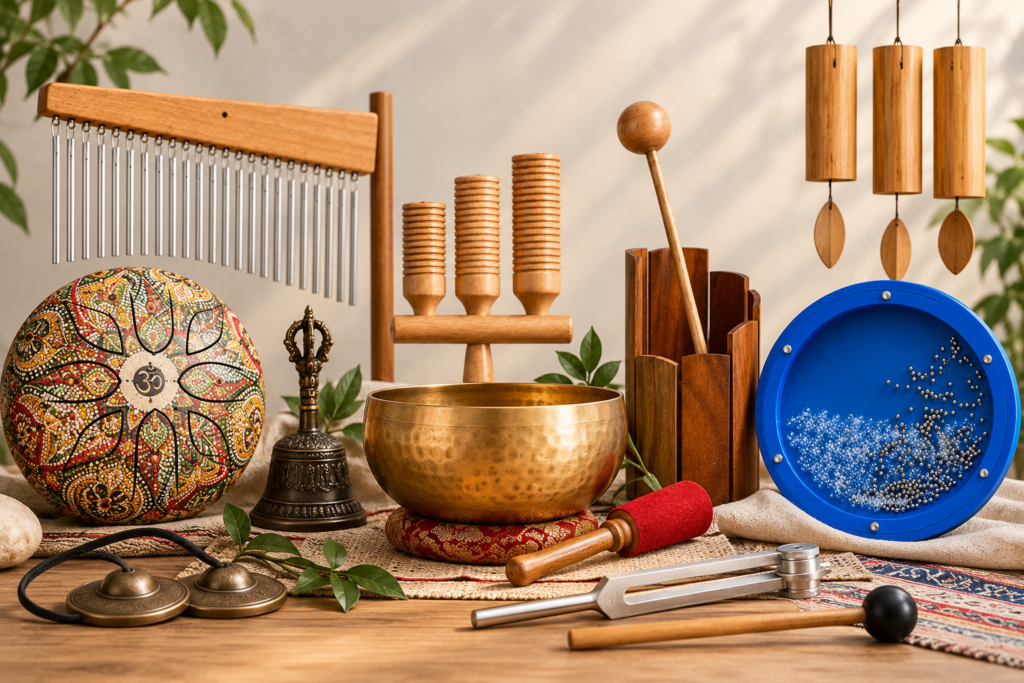
One of the most important parts of a Sound Healing Course is becoming familiar with different instruments.
Depending on the course, you may learn about:
Jaltaranga (Big & Small)
Tibetan Bells
Tuning forks
Swimming Chimes
Drums
Koshi
Tibetan Tingsha
Wood Byne
Wind Chimes 24 bar
Sound Healing Bowl
Other traditional and contemporary sound tools
Each instrument has its own sound, tone, volume and method of use. Participants may learn how to hold, play and care for instruments safely.
At Healing Harmony, participants receive practical exposure to 30+ Sound Healing Instruments, allowing them to explore a wide variety of sounds and techniques.
3. Practical Singing Bowl Training
Singing bowls are commonly used in Sound Healing sessions. A good training program should provide hands-on experience rather than only theoretical information.
Participants may learn:
How to position a singing bowl
How to use different mallets
How to create a clear and consistent sound
How to explore different playing techniques
How to maintain appropriate volume
How to use sound in a guided setting
Practical training helps learners develop confidence and become more comfortable with the instruments.
4. Exploring Sound Healing Techniques
A Sound Healing Training program may introduce several techniques for using sound during individual or group sessions.
These may include:
Guided sound meditation
Relaxation-based sound sessions
Instrument demonstrations
Rhythmic sound practices
Use of silence between sounds
Layering different instruments
Creating a structured sound experience
The techniques taught should always be used according to the participant’s level of training and professional scope.
A beginner should focus on developing awareness, consistency and responsible practice instead of trying to create complicated sessions immediately.
5. Understanding Session Structure
Learning how to play an instrument is only one part of becoming a Sound Healing practitioner. You must also understand how to organise a session.
A course may teach you how to plan:
The purpose of the session
The space and environment
The instruments required
The opening and introduction
The main sound experience
Periods of silence and reflection
The closing process
Participant feedback
A well-planned session should feel clear, comfortable and appropriate for the people attending.
6. Creating a Suitable Healing Environment
The environment can influence how participants experience a Sound Healing session.
Training may cover practical considerations such as:
Arranging instruments
Preparing a quiet space
Managing lighting and sound levels
Creating a comfortable seating or resting area
Explaining the session before it begins
Respecting participant preferences
Maintaining a calm and professional atmosphere
A responsible facilitator should also ask participants about any concerns or sensitivities and provide the option to pause or leave the session.
7. Developing Facilitation and Communication Skills
If your goal is to become a Sound Healing Teacher, you need more than instrument knowledge. You must also learn how to guide people clearly and respectfully.
Teacher Training may help you develop skills such as:
Explaining Sound Healing in simple language
Giving clear instructions
Guiding participants through a session
Using an appropriate voice and pace
Observing participant comfort
Responding to questions
Managing a group environment
Closing a session professionally
These communication skills can be especially useful for coaches, yoga teachers, trainers and wellness professionals.
What Is the Role of Practical Training?
Practical learning is one of the most valuable elements of a Sound Healing Certification Course.
Reading about an instrument is different from actually using it. Hands-on practice allows you to understand the sound, movement, volume and technique more effectively.
When choosing a course, ask whether it includes:
Live demonstrations
Hands-on instrument practice
Guided sessions
Opportunities to ask questions
Practice with different instruments
Feedback from the trainer
A course that includes practical exposure can help you build greater familiarity and confidence over time.
What Should You Look for in Sound Healing Training?
Before enrolling in a Sound Healing Course, consider the following:
Trainer Experience
Check the trainer’s professional background, experience and teaching approach. Look for information that can be verified through the training provider’s official website or professional profile.
At Healing Harmony, the training is conducted by Jignesh Patel, Professional Healer and Wellness Coach, with 12+ years ofexperience and experience working with 5,000+ people.
Clear Course Curriculum
Review the complete curriculum before making a decision. Ensure that the course covers both theoretical understanding and practical training.
Certification Details
Understand what the certificate represents. A course certificate confirms participation or completion of a particular training program. It should not be confused with a medical qualification, government licence or guarantee of professional success.
Ethical and Responsible Teaching
Choose a provider that avoids exaggerated claims about healing, treatment or income. Sound Healing should be presented as a complementary wellness practice and not as a replacement for qualified medical or psychological care.
Learn Sound Healing with Healing Harmony
Healing Harmony offers a Sound Healing Residential Retreat – A Teacher Training Course for people who want to explore Sound Healing in a practical and immersive environment.
The training is designed to help participants understand Sound Healing, practise with different instruments and develop foundational skills for facilitating sound-based wellness experiences.
Before enrolling, contact Healing Harmony for the latest course curriculum, fee, accommodation details and certification information.
Final Thoughts
A Sound Healing Course can introduce you to much more than singing bowls. It may include the foundations of sound, practical instrument training, session preparation, facilitation skills and responsible professional practice.
Whether you are a beginner, coach, yoga teacher or wellness professional, choose a course that matches your goals and provides clear, practical and ethical training.
Frequently Asked Questions About Sound Healing Courses
1. What do you learn in a Sound Healing Course?
A Sound Healing Course typically covers the fundamentals of sound and vibration, different Sound Healing Instruments, practical techniques, session preparation and facilitation. Depending on the program, participants may also learn how to structure individual or group Sound Healing sessions.
2. Is Sound Healing Training suitable for beginners?
Yes. Many beginner-friendly Sound Healing Training programs are designed for people who are new to the practice. You do not necessarily need previous experience, but it is important to check the course eligibility and curriculum before enrolling.
3. What instruments are taught in Sound Healing Training?
The instruments covered depend on the course. They may include singing bowls, gongs, chimes, drums, tuning forks and other sound-based instruments. At Healing Harmony, participants get practical exposure to 30+ Sound Healing Instruments.
4. Do I get practical experience in a Sound Healing Course?
Practical experience is an important part of learning Sound Healing. A comprehensive course may include demonstrations, hands-on practice, guided sessions and opportunities to work with different instruments under trainer guidance.
5. What is the difference between a Sound Healing Course and Teacher Training?
A Sound Healing Course may focus primarily on understanding the practice and learning basic techniques. Sound Healing Teacher Training generally goes further by including practical application, session structure, facilitation skills and preparation for guiding others through sound-based experiences.
6. Can coaches, yoga teachers and wellness professionals learn Sound Healing?
Yes. Coaches, yoga teachers, trainers and wellness professionals may choose Sound Healing Training as an additional skill for their professional development. It can complement suitable wellness, mindfulness and personal development practices when used within their training and professional scope.
7. What should I consider before choosing a Sound Healing Certification Course?
Look at the trainer’s experience, course curriculum, practical training, instruments covered, duration, certification details and learning environment. It is also important to choose a provider that communicates responsibly and does not make unsupported medical, healing or income claims.
8. How can I start learning Sound Healing with Healing Harmony?
You can explore Healing Harmony’s Sound Healing Residential Retreat – A Teacher Training Course and review the complete course details before enrolling. The program includes practical exposure to 30+ instruments and an International Certificate. Contact Healing Harmony for the latest schedule, curriculum, fees and accommodation information.